

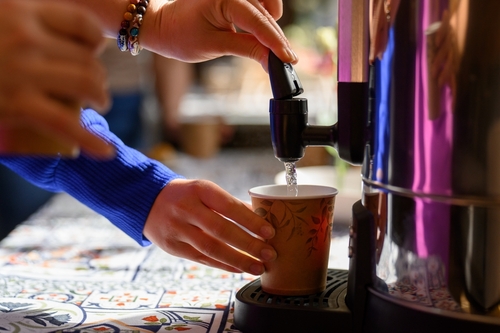
A simple guide to how hot water dispensers work
Hot water dispensers may seem like magic: they provide boiling hot water at the touch of a button whenever you need it, with no wait time.
However, they run on a meticulously designed mechanism, an ongoing heating and filtering system, to make sure that you can have clean, hot water at the click of a finger.
If you want to understand a bit more about how they work, whether you’re thinking about getting one or you already have one installed, then stick with us as we break it down in a simple, digestible way.
Key takeaways
- Hot water boilers provide instant, fresh hot water when you need it.
- In most commercial hot water dispensers, water enters the machine, is filtered, heated using an electrical heating element, and either stored at a controlled temperature or rapidly heated as needed.
- Internal thermostats keep track of the temperature of the water to make sure it’s kept at a consistent temperature.
- Hot water boilers need recovery time to heat up fresh water when it’s been used a lot in one go, so it’s important to not use it for a bit after heavy periods of use.
- You can get tank-based water dispensers and flow-through water dispensers, which have different heating processes, depending on what you need.
- Many hot water dispensers heat the water to around 90°C to 96°C.
What is a hot water dispenser?
If you spend a lot of time waiting around for kettles to boil, especially during work, then a hot water dispenser can be a game changer.
These small but mighty boilers provide instant hot water whenever you need it, so you can prepare hot drinks, like tea and coffee, or instant noodles in seconds.
The hot water dispenser heats water internally and keeps it at a controlled temperature, so it’s ready when you need it. That way, the water isn’t constantly being cooled and heated back up, and you’re not wasting money on electricity to re-boil water every time.
A lot of homeowners are now starting to install hot water boilers in their homes for convenience, but you’ll find them more often in offices, schools, or hospitality settings, like cafes or bistros.
So, how does a hot water dispenser work?
A hot water dispenser takes water from a mains connection, bottle, or internal reservoir, heats it to a set temperature, and keeps it ready to dispense whenever you need it.
Let’s dig a little bit more into each part of the process.
Step 1: Water enters the dispenser
The dispenser needs a water supply, which could come from a bottled water container, straight from a mains supply or refillable reservoirs.
With a mains-fed hot water dispenser, the unit is connected directly to the building’s water supply, which means it has a constant supply of filtered water going directly to it.
Other dispensers use large water bottles or refillable reservoirs instead, but these need to be replaced regularly.
Step 2: The water may pass through a filter
A lot of hot water dispensers include a filtration system, especially mains-fed models.
If it does, before the water reaches the heating system, it may pass through a filter designed to reduce substances that can affect its taste, smell, or appearance, like sediments, bacteria, certain minerals, and chlorine.
Filtration can also help protect parts of the dispenser from deposits building up over time, so that it lasts longer.
Step 3: The heating element warms the water
Once inside the dispenser, an electrical heating element heats the water up so that it’s hot and ready to dispense.
It works similarly to a kettle, but it’s much more efficient; electricity passes through the element, producing heat that transfers to the surrounding water until it reaches the machine’s preset temperature.
Commercial hot water dispensers often heat water to just below the boiling point, although the exact temperature varies by machine.
Step 4: The dispenser keeps the water hot
This is what allows a hot water dispenser to provide water immediately.
The heated water is stored inside an insulated internal tank where a thermostat or temperature sensor continually monitors the water and activates the heating element whenever the temperature starts to fall.
That way, the dispenser doesn’t have to heat up a cold tank of water every time someone wants to use it, saving time and energy.
The insulation around the tank also reduces heat loss, so the heating element only switches back on when needed rather than running continuously.
Step 5: Hot water is dispensed
When you press the button, lever, or tap, a valve inside the dispenser opens and lets heated water flow from the internal tank or heating chamber to the outlet.
As water is dispensed from the boiler, fresh, cold water will take its place, and the heating process will restart. If several people use the dispenser one after another, the stored hot water supply may eventually run low.
The dispenser needs recovery time to heat the replacement water, so choosing the right tank capacity to accommodate the number of people using the dispenser is important.
Do all hot water dispensers work in the same way?
Some hot water dispensers connect directly to the mains water supply and refill automatically, while others draw water from a bottle or refillable reservoir.
In terms of the system itself, some keep a tank of hot water ready throughout the day, while others heat water as it passes through the system; it depends on which one you choose.
- Tank-based water dispensers: These machines heat a set amount of water and store it inside an insulated internal tank. A thermostat monitors the temperature and activates the heating element whenever the water begins to cool. As water is used, the tank is replenished, and the replacement water is heated back to the required temperature.
- Instant/flow-through hot water dispensers: With these systems, water passes through a heating chamber where it’s rapidly heated before reaching the outlet. This can reduce the amount of water that needs to be stored at a high temperature and is common in smaller, countertop dispensers.
What temperature does a hot water dispenser reach?
Most hot water dispensers heat water to around 90°C to 96°C, which is hot enough to prepare most teas, coffees, and other hot drinks without waiting for a kettle to boil.
Some dispensers operate at a fixed temperature, while others allow the temperature to be adjusted, which is great for workplaces where people are preparing both drinks and food.
Find the right hot water dispenser for your workplace
At Drop Water Coolers, we can help you find a solution for your business, home, or workplace so you can enjoy fresh, filtered water at the drop of a hat.
Whether you’re looking for a mains-fed cooler, a bottled dispenser, or a combined hot and cold water cooler, browse our products today and enjoy a free 14-day trial on us before you buy!